
PMB Performance Technical Guide
The 914 Sloppy Shifter: “No More!”
How to Make a Porsche 914 Shift the Way It Should
Every 914 owner knows the feeling. You climb into the car, fire up that flat-four or flat-six, pull out onto the road, and then immediately remember that the shifter is… well… very 1970s and very 914.
There’s charm in it, for sure. These cars are raw, mechanical, lightweight, and honest. That’s why we love them. But let’s be real: a tired 914 shifter can feel less like a precision Porsche gearbox and more like you’re stirring a bowl of alphabet soup looking for the right letter. With its masterful mid-engine configuration, the Porsche 914 shift linkage has to do some fancy footwork to eventually engage the right gear. Our 911 brethren have it a little easier with a “direct-in” connection to the nose cone of the transmission.
The good news? The 914 transmission itself isn’t usually the whole problem. After all, it is the same 911/901 gearbox, just turned around. It’s that “turned-around” part and the required linkage that create that vague, sloppy, “where the heck is third?” feeling. Everything between your hand and the gearbox — the shifter, bushings, joints, firewall points, rear rod, and linkage hardware — generally needs some love.
And that’s where the right setup makes a huge difference.
Part One: Start With the Side-Shift Transmission
It didn’t take Porsche long to find the weak link. The early cars used a tail-shift layout, which meant the linkage had to pass through a firewall, around the engine, and work its way to the back — or tail — of the transmission. This was accomplished through a series of bushings and bends that somehow made their way to the rear of the gearbox. If you’re starting to get cross-eyed, you’re starting to see the problem.
Complaints arrived in the form of somewhat hysterical enthusiast-magazine reviews. Porsche responded with a much better system for the later cars. The much-coveted side-shift setup arrived on 1973–76 models. It used a shift console attached to the side of the transmission, giving a much shorter shift shaft more direct access to the internal shift forks.
This later side-shift layout is generally the better starting point when you want a 914 to shift the way it should. Most of the setup discussed here is aimed at side-shift cars. If you have a 1973–76 914, you’re already in the right neighborhood. If you have a 1970–72 car, verify whether it has been converted before ordering side-shift-specific parts. Does your shift lever terminate at the side of the transmission? No? You have a tail shifter.
If you have a tail-shift car, skip Part Three and concentrate on Parts Two and Four. Great bushings and a killer shift console are where you can make the biggest gains.
|
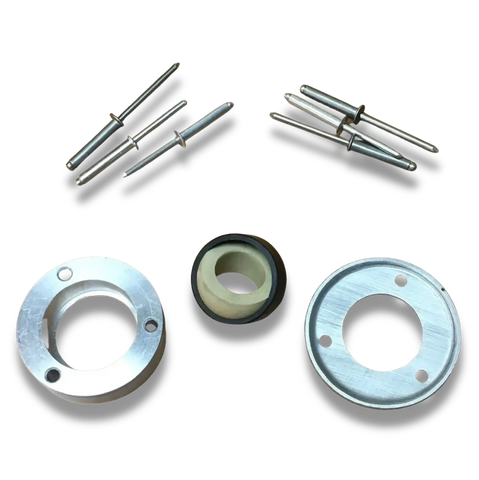
Part Two: Replace the BushingsHere’s the part a lot of people miss. There are bushings galore in both tail-shift and side-shift cars, and some are, quite frankly, bad out of the box. Starting at the shift lever, there’s a cup bushing under the ball at the base of the shift shaft. Make certain it isn’t worn. Moving toward the rear of the car, there’s another bushing in the tunnel directly behind the shifter. This bushing holds the fore-and-aft rod in place and is often sloppy, broken, or missing altogether. Next comes a big one: the firewall bushing. This is where the phrase “bad out of the box” was coined. Our recommendation for both tail shifters and side shifters is a spherical firewall bushing. It provides a precision fit with virtually no room for slop. Take a deep breath. You’ve made it this far, and things are already much better. If this is your stopping point, button everything up with fresh bushings on the transmission side and say a few prayers. Tail-shift owners can skip ahead to Part Four and the RennShift Performance Shifter. |
Part Three: The Tangerine Racing Side-Shift Linkage KitBy now, you know we’re partial to the later side-shift transmission. If you have a nice shifter inside the car, that’s only half the story. If the rear linkage is worn, loose, binding, or full of tired bushings and hardware, you’re still asking the gearbox to interpret a sloppy message. Even a freshly bushed stock side shifter leaves quite a bit of room for improvement. That’s where the Tangerine Racing Side-Shift Linkage Kit comes in. It is designed specifically for side-shift 914 transmissions and replaces the engine-compartment shift rod with a special assembly using two universal joints. It also uses a short shaft supported by two bronze bushings to transfer shift-lever movement more accurately into the gearbox. New cone screws are included, and the kit is available in orange or black with rod options for 914-4 and 914-6 applications, provided the car has a side shifter or side-shift conversion. The PMB verdict: Pair the Tangerine linkage kit with a spherical firewall bushing and the later side-shift transmission, and you’re about as close as it gets to the perfect, notchy 914 shifter feel. |

|
Part Four: The RennShift Performance Shifter
The icing on the cake. The last piece of the puzzle is the part you actually touch: the shifter.
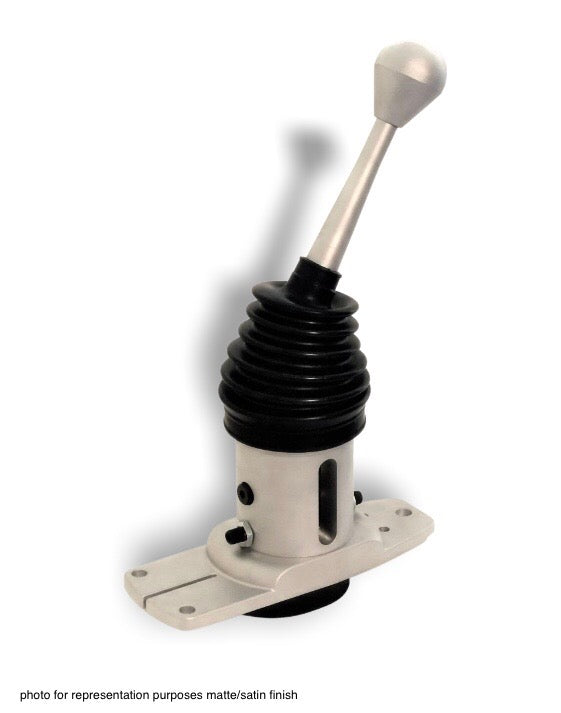
The RennShift Performance Shifter from JWest Engineering replaces the stock shifter with precision engineering that is simply lacking in the factory unit. It is a fully adjustable shift console with adjustable throw, adjustable spring gates, bronze bushings, and a much more positive feel throughout the shift pattern. JWest lists two selectable throw reductions — 20% and 33% — and notes that the setting can be changed later.
That adjustability matters. On these older Porsche gearboxes, shorter is not always better. JWest specifically points out that Porsche’s servo-style synchro transmissions do not respond like modern transmissions and that over-shortening the throw can reduce shift resolution and create unnecessary mechanical abuse.
That’s why we like this shifter. It isn’t a hacked-together short-shift kit. It’s a proper, driver-focused piece that gives you a tighter, cleaner, more confident shift without trying to turn a 914 into something it isn’t.
Tail-Shift Owners Aren’t Left OutHey, tail-shift guys — we’re glad you’re back, and we’re talking to you. JWest Engineering makes RennShift units for both tail-shift and side-shift cars, and we carry both. While the tail-shift version won’t deliver the ultimate precision of a fully sorted side-shift system, it is the best remaining upgrade you can make without converting the transmission layout. Make certain all of your bushings are fresh and that you have the spherical firewall bushing. We also carry the RennShift designed for 1973–76 914 side-shift transmissions. It can be used on earlier 914s that have already been upgraded to the factory side-shift layout, but it does not convert a tail-shift car into a side-shift car by itself. You still feel the car. You still feel the gearbox. You just lose a lot of the slop. |
|
Why This Combination Works So Well
A 914 shifter is not one part. It’s a system. Your hand moves the lever. The lever moves the tunnel linkage. The linkage passes through bushings and joints. The rear rod carries that movement back to the transmission. Then the gearbox finally gets the message.
Every loose bushing, worn joint, sloppy coupler, and flex point adds up. By the time your hand says “third gear,” the transmission might be getting something closer to “maybe third, maybe fifth, good luck.”
The RennShift and Tangerine kit attack the problem from both ends. The RennShift gives the driver a more positive gate, cleaner throw, and more mechanical feel. The Tangerine kit tightens the rear linkage with universal joints and bronze-supported movement.
Together, they turn one of the most common complaints about the 914 into one of the best parts of the driving experience. Not in a fake modern-car way, either. It still feels like a 914. It still has that mechanical, air-cooled, mid-engine personality. It just feels like everything is finally on the same page.

|
Don’t Forget the BasicsBefore calling any shifter setup done, the basic wear items still matter. Firewall bushings, ball cups, coupler bushings, cone screws, and adjustment all play a role. If your 914 feels awful, don’t assume one part is the whole fix. The best setup starts with a complete, honest look at the entire system. That’s very 914, honestly. These cars reward doing things properly. They don’t always need the craziest part on the market — they need the right parts working together. |
The PMB Take
At PMB, we love the 914 because it’s one of those cars that gets better the more you understand it. It isn’t trying to be a 911. It’s mid-engine, lightweight, simple, and incredibly fun when it’s sorted. A properly set-up 914 with good brakes, good suspension, and a tight shifter is one of the most rewarding vintage Porsches you can drive.
Here’s our recommended to-do list, in order:
- Sort out the bushings first. A spherical firewall bushing is a must in our book.
- Add the Tangerine Racing linkage kit if you have a side-shift transmission. It will make the single largest change in your shifting feel. Tail-shift owners can skip ahead to the RennShift, but all bushings should be fresh, including the spherical firewall bushing.
- Finish with JWest’s RennShift Performance Shifter. It’s the icing on the cake.
The ultimate 914 shifter setup is not simply about shortening the throw. It’s about making the car more connected. RennShift handles the feel at your hand. Tangerine Racing cleans up the movement out back. Fresh bushings and proper adjustment finish the job.
Put it all together, and suddenly the 914 feels less like an old car you’re fighting — and more like the amazing mid-engine Porsche it was always supposed to be.